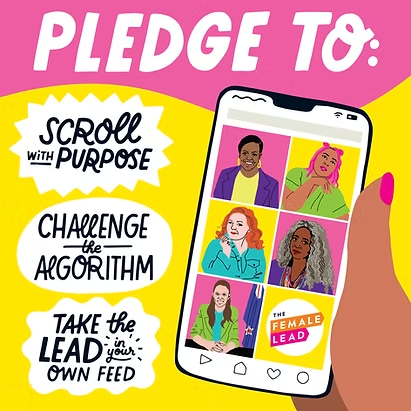
Social comparison occurs when kids view others’ posts on social media and compare their own lives to those seemingly perfect images. Most posts are edited to highlight the best moments, which can lead kids to feel their own lives are less exciting or fulfilling. This can lower their confidence, cause feelings of inadequacy, and trigger Fear of Missing Out (FOMO), which may result in sadness or anxiety.
Guidance
Limit Social Media Use
Set daily limits to prevent excessive scrolling and promote balanced use.
Establish phone-free times, such as during meals or before bed, to encourage breaks from social media.
Encourage participation in offline activities that foster confidence, creativity, and connection.
Discuss Reality vs. Online Perception
Talk about how most social media posts are edited or filtered and don’t represent real life.
Encourage them to follow accounts that promote body positivity, self-acceptance, and diverse perspectives.
Discuss the importance of unfollowing accounts that make them feel inadequate or unhappy.
Have Open Conversations
Share your own experiences with comparison and the strategies you’ve used to overcome it.
Encourage them to notice how social media affects their emotions—both positively and negatively—and reflect on those feelings.
Let them know they can always talk to you about their feelings and that you’re there to support them.
Other Considerations
Peer comparisons can be especially challenging for teens, sometimes even more so than comparisons with influencers or celebrities.
Social comparison affects all teens, regardless of gender identity, and should be addressed universally.
Kids may not recognize how comparison impacts their emotions and might need your help identifying these feelings.
Social media use during emotionally vulnerable times can amplify feelings of inadequacy or exclusion.
Conversation Starters
Ask them how social media posts make them feel and explore why certain posts have that impact.
Talk about how filters and editing create unrealistic images online, and discuss how those images can affect self-esteem.
Share your own experiences with comparison to help them feel less alone and provide relatable strategies.
Discuss how social comparison triggers their brain to seek more content, reinforcing negative feelings rather than alleviating them.
Help them understand that taking a break is often the best way to feel better.